
Travertine vs. Concrete Pavers: Which is Right for Your Project?
Compare travertine and concrete pavers to determine the best option for durability, style, cost, and performance in your outdoor space.

Choosing between travertine and concrete pavers for your outdoor spaces can be a challenging decision, as both materials offer unique benefits and drawbacks. A well-maintained yard with great curb appeal yields the potential of increasing your home's value. Travertine, a natural stone formed by mineral springs, boasts unparalleled beauty and timeless elegance with its unique patterns and warm earth tones. On the other hand, concrete pavers, known for their affordability and extensive customization options, provide a practical and visually appealing solution for outdoor flooring. This guide explores the features, formation, uses, costs, and benefits of travertine and concrete pavers to help you make an informed decision for your project.
What is Travertine?
Travertine is a type of natural stone similar to marble, limestone, and granite. It belongs to the limestone family, primarily composed of calcium carbonate. Travertine is formed by mineral springs or groundwater, creating unique patterns and colors that range from soft grays to warm earth tones.
How is Travertine Made?
Travertine is created through a natural process involving the deposition of minerals by mineral springs or groundwater heated by geothermal activity. Over time, these minerals, mainly calcium carbonate, accumulate and solidify into layers of sedimentary rock. As water flows over these layers, it deposits dissolved minerals, which precipitate out and add to the rock's structure. This gradual buildup and solidification over thousands of years results in travertine's unique colors and textures.
Popular Travertine Styles
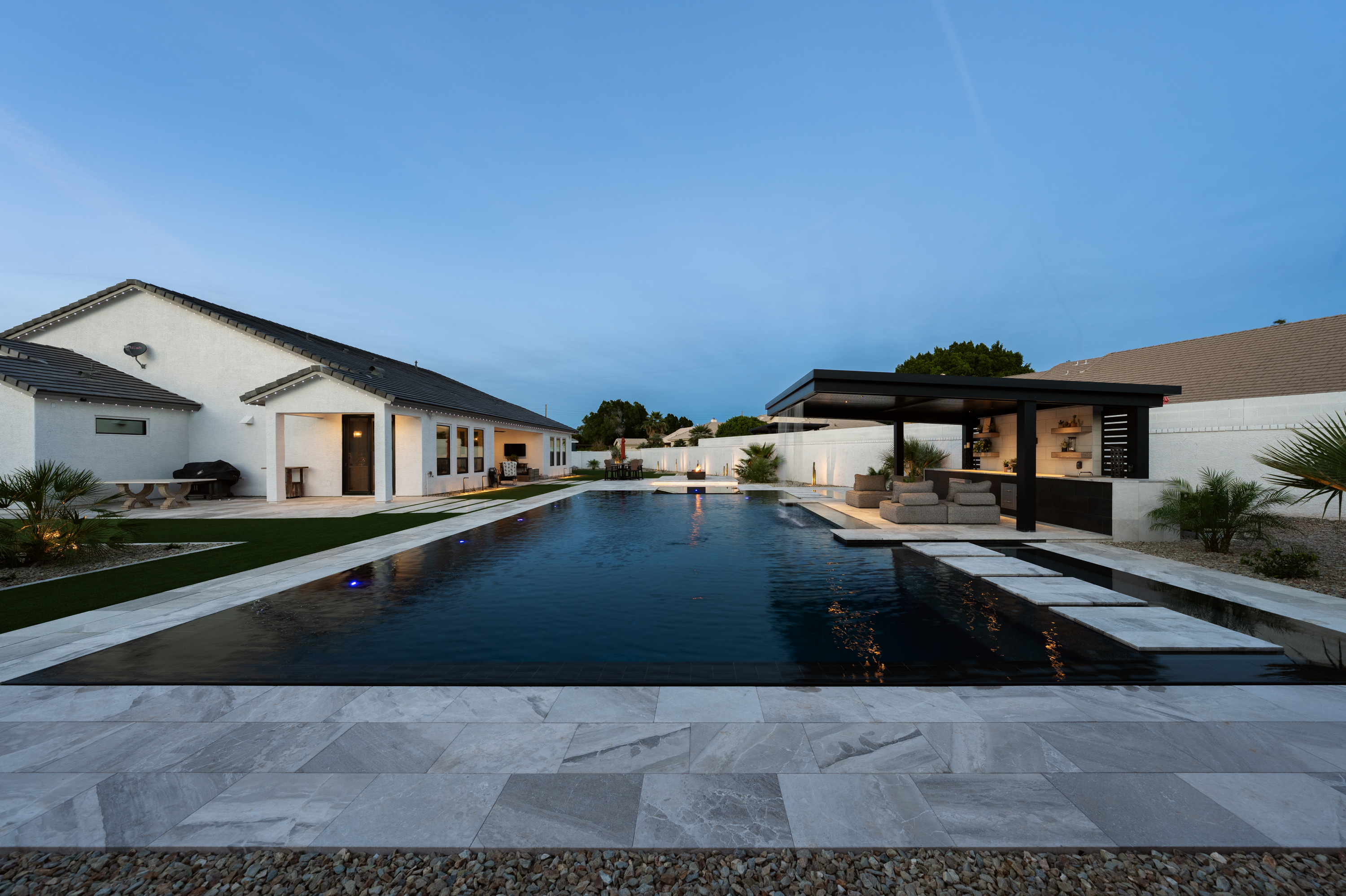
Travertine is highly valued for its versatility and aesthetic appeal, making it suitable for a variety of architectural and design applications. Common uses include indoor and outdoor flooring, wall cladding, countertops and vanity tops, outdoor paving for patios and pool surrounds, decorative elements such as columns and moldings, fireplace surrounds, and shower interiors where its luxurious, spa-like quality shines.
Cost of Travertine
Travertine is typically sold by the square foot and the cost can vary based on its quality, color, and finish. Generally, travertine is more expensive than other natural stones due to its unique formation and aesthetic appeal. However, the price range can be broad, with some options being more affordable than high-end marble or granite.
Cons of Travertine
- Porosity: Travertine is more porous than other natural stones, which means it can absorb liquids and stain if not properly sealed.
- Maintenance: Regular sealing is required to protect the stone from stains and damage, increasing long-term maintenance costs.
- Susceptibility to Acid: Travertine can be damaged by acidic substances, which can etch the surface and dull its finish.
Pros of Travertine
- Aesthetic Appeal: Travertine's natural variations in color and texture provide a unique and luxurious look.
- Durability: When properly maintained, travertine is a long-lasting and durable material suitable for high-traffic areas.
- Versatility: Available in various colors and finishes, travertine can complement a wide range of design styles.
- Heat Resistance: Travertine's ability to withstand heat makes it an excellent choice for fireplace surrounds and outdoor applications.
Travertine offers a blend of beauty, durability, and versatility, making it a top choice for various architectural and design projects. Its unique formation and natural variations provide an elegant and timeless appeal that enhances any space. Consider consulting with a professional to ensure proper installation and maintenance, maximizing the longevity and aesthetic of your travertine surfaces.
You might also find our posts on How to Design a Dog-Friendly Yard Without Sacrificing Style and How to Transform Your Yard into the Perfect Gathering Spot helpful.

Justin leads Kevens Landscape with lifelong industry experience and a commitment to quality.

